

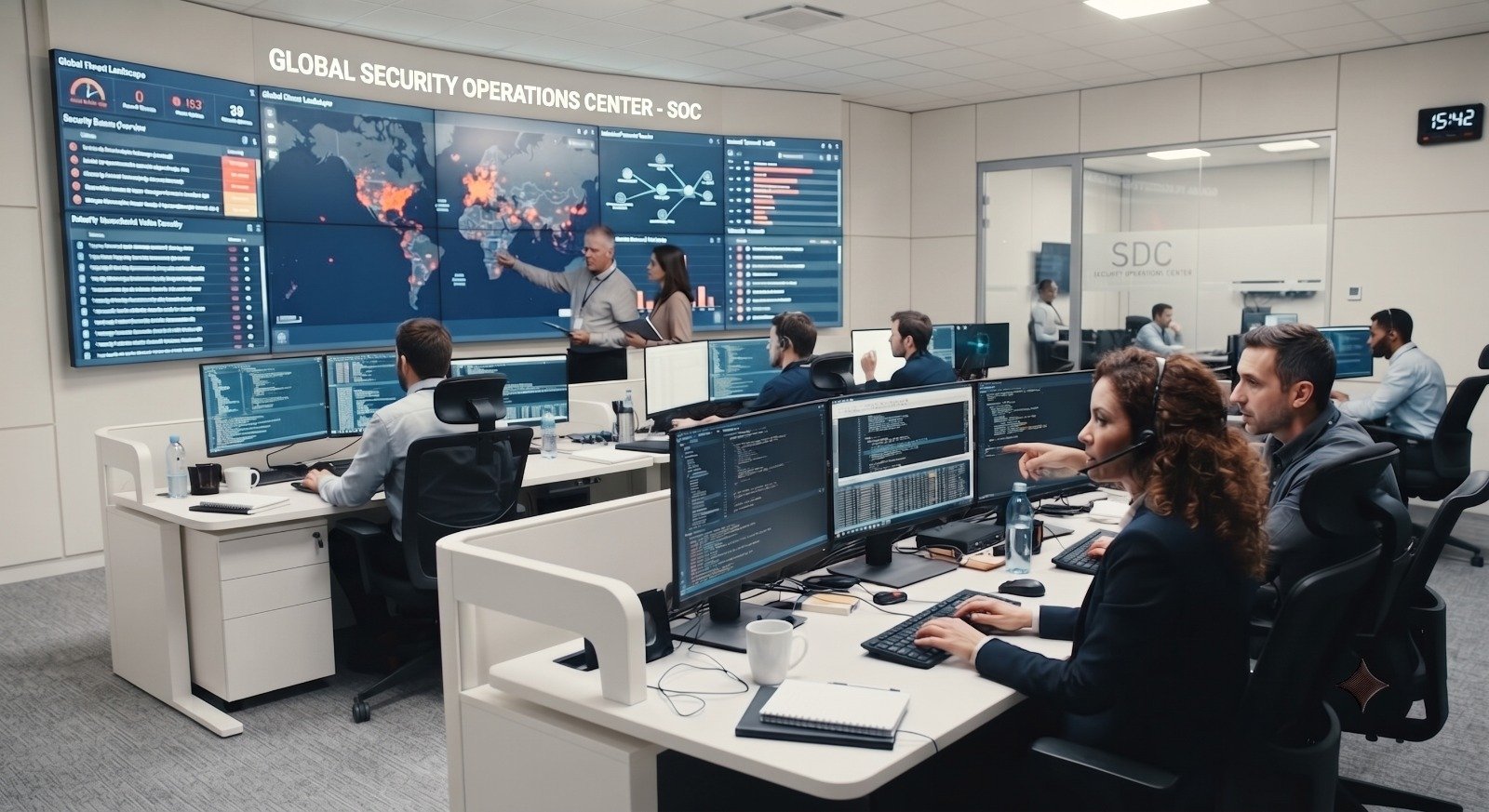
Every day, organizations across Bangladesh invest in strengthening their digital perimeters. Firewalls are deployed, endpoint protection software is installed, cloud accounts are secured with multi-factor authentication, and employees attend annual security awareness training.
Yet, despite these continuous investments, cyber incidents routinely dominate industry news. Ransomware, business email compromise (BEC), supply-chain compromises, and insider threats are no longer distant risks affecting only foreign multinationals. Today, they pose immediate threats to financial institutions, healthcare providers, software developers, e-commerce platforms, manufacturing plants, and fast-growing enterprises throughout Bangladesh.
The fundamental question for business leaders isn't whether your organization owns security tools.
It is whether someone is actively monitoring, correlating, and acting on them around the clock.
A firewall blocks known bad traffic. An antivirus quarantines flagged files. A SIEM tool aggregates event logs. However, static technology cannot actively investigate a stealthy intrusion, determine its potential lateral movement, or contain an ongoing attack at 2:00 AM before damage escalates. Security tools provide visibility and protection, but people and processes are needed to investigate alerts, validate threats, and respond before an incident becomes a business crisis.
That is where a Security Operations Center (SOC) becomes vital.
If you are evaluating whether your security posture matches your operational risk, here are seven critical signs that your business has outgrown traditional defenses and needs a modern SOC.
Sign 1: Your IT Team Is Wearing Too Many Hats
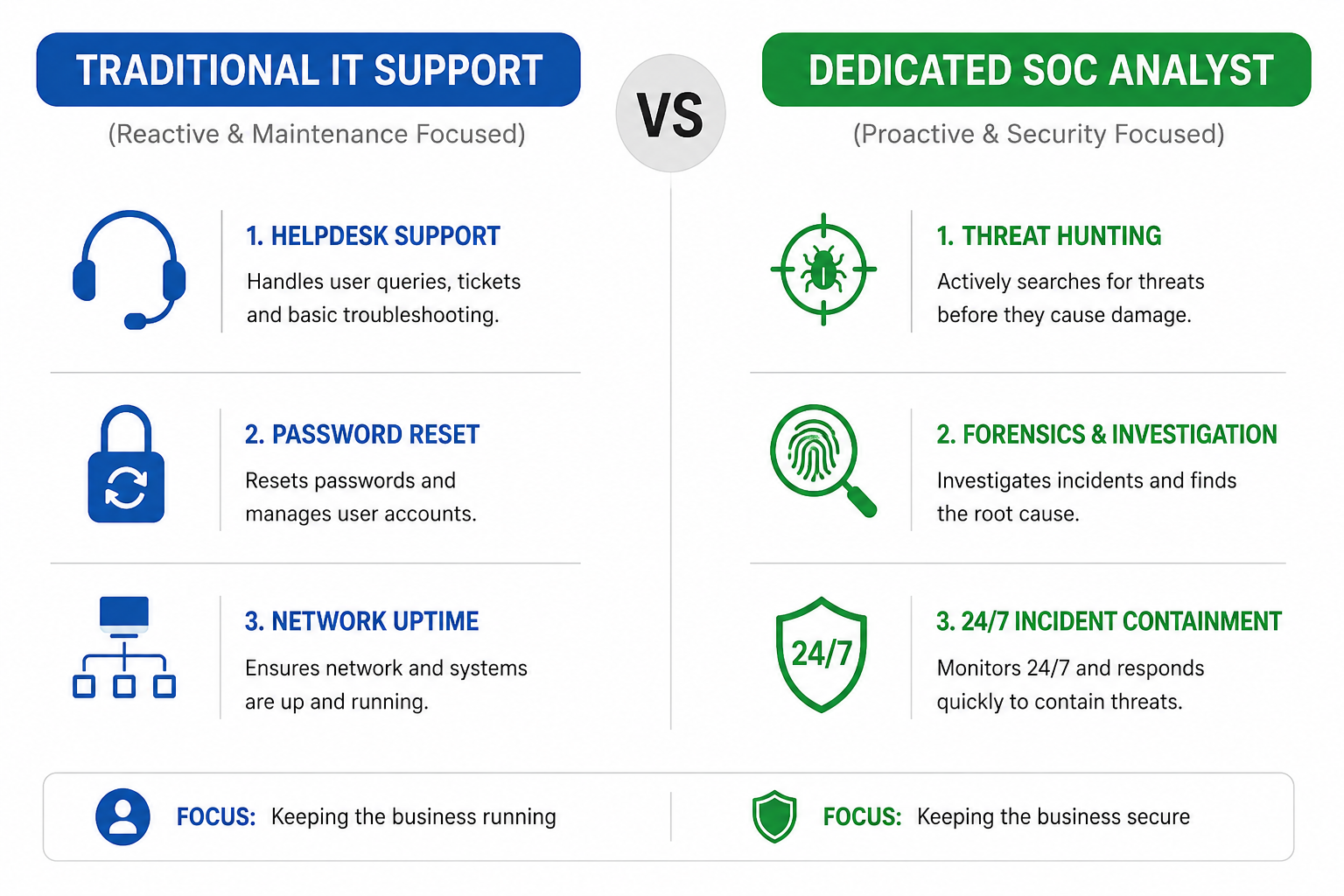
In many organizations, internal IT teams handle an overwhelming array of day-to-day responsibilities:
Network infrastructure and uptime
Cloud application management and migrations
Hardware provisioning and helpdesk support
System updates and user password resets
When security alerts trigger during peak business hours—or worse, in the middle of the night—IT staff often lack the capacity to perform deep digital forensics. Cybersecurity requires continuous, dedicated vigilance, not periodic review between helpdesk tickets.
Business Impact: Delayed threat detection, uninvestigated alerts, and severe staff burnout leading to high turnover among your core IT personnel.
Sign 2: Security Alerts Accumulate Without Active Review
Modern enterprise networks generate thousands of event logs daily. Firewalls, endpoint detection and response (EDR) platforms, and cloud portals continuously trigger warnings.
When teams face high alert volume without specialized triage analysts, alert fatigue sets in. Critical indicators of compromise get buried under routine false positives. Organizations can reduce this risk through centralized security monitoring, automated alert correlation, and expert analyst review.
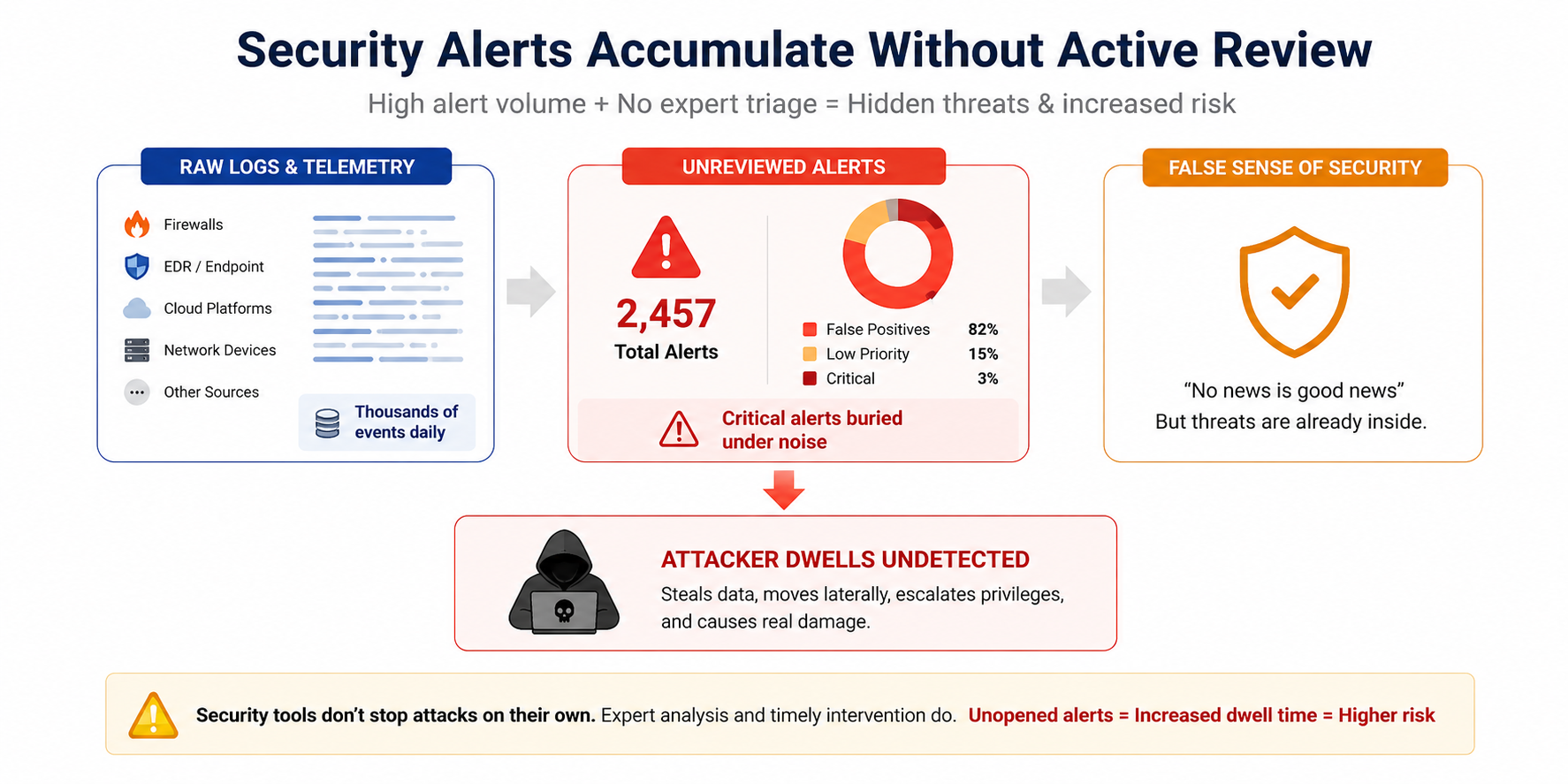
Security tools do not stop complex cyberattacks independently—expert analysis and timely intervention do. Unopened alerts create a dangerous illusion of protection while dwell time increases.
Sign 3: Your Core Revenue Depends on Undisrupted Digital Operations
Ask yourself a straightforward operational question: What happens if our primary systems go offline for 48 hours due to a ransomware infection? According to the IBM Cost of a Data Breach Report, data breaches can create significant financial and operational consequences, including business disruption, recovery costs, regulatory exposure, and reputational damage.
For modern enterprises, the consequences are immediate and severe:
Financial Institutions: Halted transaction processing and regulatory scrutiny
E-commerce & Retail: Lost sales volume and customer attrition
Software Firms: Service level agreement (SLA) breaches with global clients
Healthcare Organizations: Delayed patient care and compromised sensitive medical data
Manufacturing: Interrupted automated production lines and supply chain bottlenecks
When technology powers your core value delivery, cybersecurity transitions from a back-office IT responsibility to a primary board-level business continuity concern.
Sign 4: Your Digital Infrastructure Is Growing Faster Than Your Defensive Capabilities
Rapid digital expansion introduces operational efficiency, but it also expands your attack surface:
Migration to multi-cloud environments (AWS, Azure, Google Cloud)
Widespread adoption of SaaS platforms (Microsoft 365, Google Workspace)
Hybrid and remote workforce arrangements
Integration of third-party APIs and supply chain portals
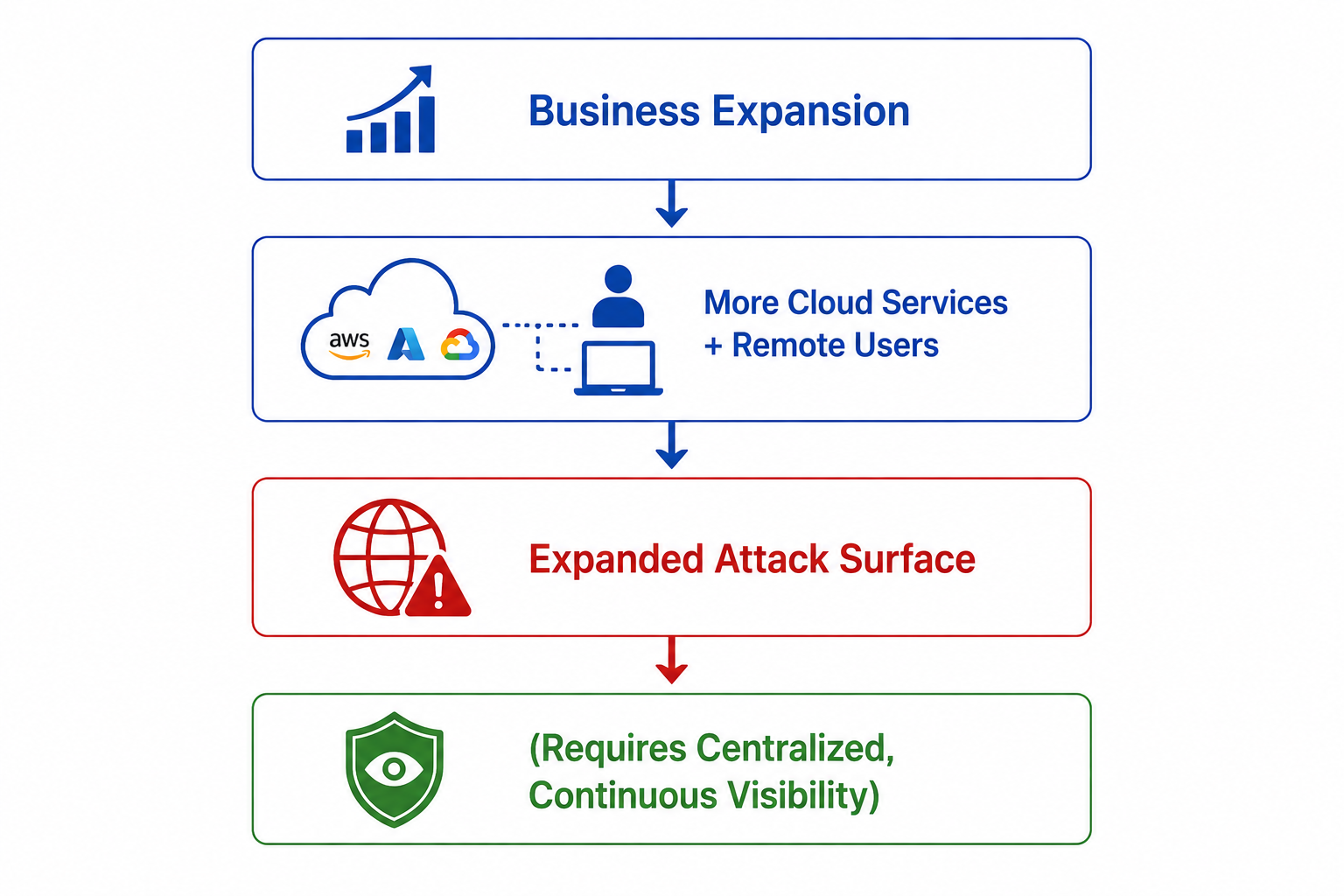
If your security operations model remains unchanged while your digital footprint doubles, organizational exposure escalates faster than your ability to mitigate risk.
Sign 5: Regulatory Compliance Demands Are Becoming More Stringent
Regulatory requirements around ICT security, incident management, logging, and operational resilience are becoming increasingly important for organizations in regulated sectors, particularly financial institutions.
Organizations across regulated sectors must demonstrate:
Continuous 24/7 Monitoring: Proactive oversight of critical data repositories
Log Retention & Centralization: Audit-ready logging across all infrastructure layers
Formalized Incident Response: Proven procedures for rapid threat containment
Regular Security Audits: Documented proof of operational risk management
Fulfilling these requirements through fragmented, manual processes is inefficient and prone to audit failure. A structured SOC simplifies compliance by centralizing monitoring, logging, and reporting.
Sign 6: You Lack 24/7 Security Coverage Across Nights, Weekends, and Holidays
Threat actors may take advantage of periods when security coverage is reduced—such as nights, weekends, and holidays.
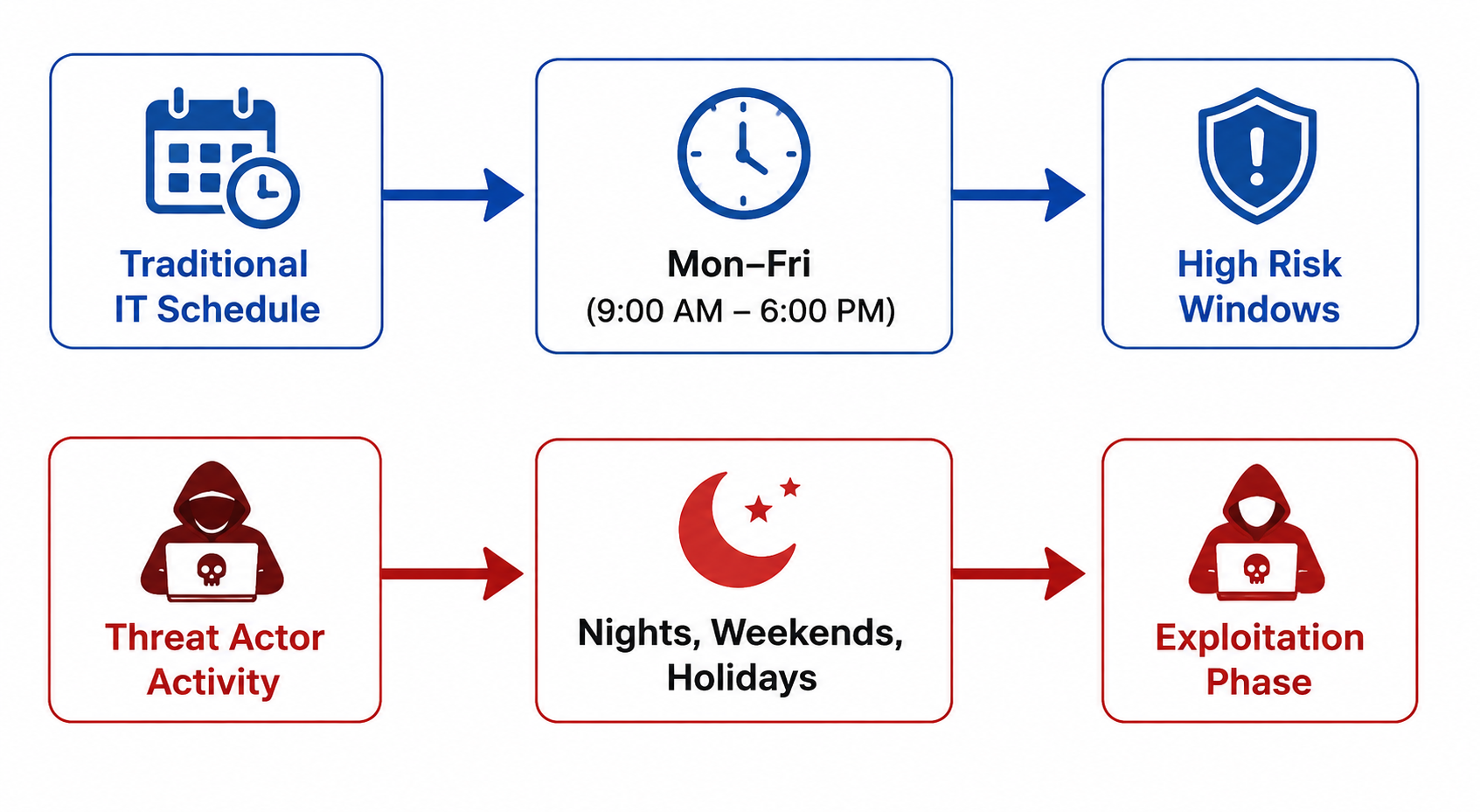
If security oversight pauses when staff leave the office at 6:00 PM, attackers gain hours of unmonitored access to navigate your network, escalate privileges, and exfiltrate sensitive data before anyone notices.
Sign 7: The Cost of Incident Recovery Outweighs the Investment in Prevention
Viewing cybersecurity solely as an operational expense often changes after an organization experiences a major breach.
The true cost of a cyber incident extends far beyond immediate remediation:
Operational Downtime: Lost productivity and revenue during recovery
Data Recovery Expenses: Forensics, system restoration, and cleanups
Legal & Regulatory Penalties: Fines for non-compliance or data exposure
Reputational Damage: Permanent loss of customer and partner trust
Proactive detection significantly lowers both the likelihood and operational impact of security incidents by identifying malicious activity during early reconnaissance rather than after data encryption. See how Penough's Incident Response & Threat Hunting services help organizations detect and contain threats before they become business disruptions.
The Strategic Path Forward for Bangladeshi Enterprises
As Bangladesh's digital economy grows, organizations face a double challenge: a rapidly evolving threat landscape alongside a competitive local talent market for specialized cybersecurity professionals.
Building, staffing, and maintaining a fully internal, 24/7/365 Tier-1 to Tier-3 SOC requires substantial capital expenditure (CapEx), continuous tool licensing, and ongoing talent retention efforts. For many growing organizations and mid-market enterprises, an internal build is neither cost-effective nor operationally practical.
This reality has driven the adoption of Managed and Hybrid SOC models, enabling organizations to gain enterprise-grade monitoring capabilities quickly, efficiently, and at a predictable operational expense (OpEx).
How Penough Strengthens Your Defense
At Penough, we bridge the gap between complex cyber threats and effective, business-aligned security operations. Our enterprise Managed SOC solutions deliver comprehensive protection tailored to regional and global compliance standards:
24/7 Continuous Monitoring: Round-the-clock event correlation and threat detection
SIEM & SOAR Integration: Centralized security logging with automated response playbooks
Proactive Threat Hunting: Uncovering hidden indicators of compromise before impact
Incident Response & DFIR: Rapid triage, containment, and forensic root-cause analysis
Regulatory Alignment: Log management and reporting designed to meet strict local audit mandates
Instead of flooding your inbox with raw alerts, Penough provides clear, prioritized, and actionable intelligence—allowing your internal IT team to focus on strategic business initiatives.
Conclusion
Cybersecurity strength is not measured by the number of software licenses your organization purchases; it is defined by the speed, accuracy, and efficiency with which your team detects and neutralizes threats.
If your organization recognizes two or more of the warning signs detailed above, now is the right time to re-examine your security operations strategy.
Evaluate Your Security Posture Today
Don't wait for a security incident to test your defensive capabilities. Contact Penough today to schedule a confidential SOC Readiness Assessment and explore how our Managed Defense Services can protect your business 24/7/365.