

Your security posture does not stand still. It changes with every move you make.
Every deployment, every cloud config change, every API release and every forgotten staging environment can in itself open a new door. Traditional penetration testing only checks the doors once a year. Continuous penetration testing is about checking the doors as they appear.
Continuous penetration testing is an operating model for ongoing, change-driven adversarial testing. You're constantly discovering assets, testing for vulnerabilities, validating the exploitability of those vulnerabilities and then retesting the fixes as the environment changes. It's not a formal NIST program category (NIST SP 800-115 covers the planning and conduct of technical security assessments and SP 800-137 covers continuous monitoring) but it is an operating model that is based on those established principles.
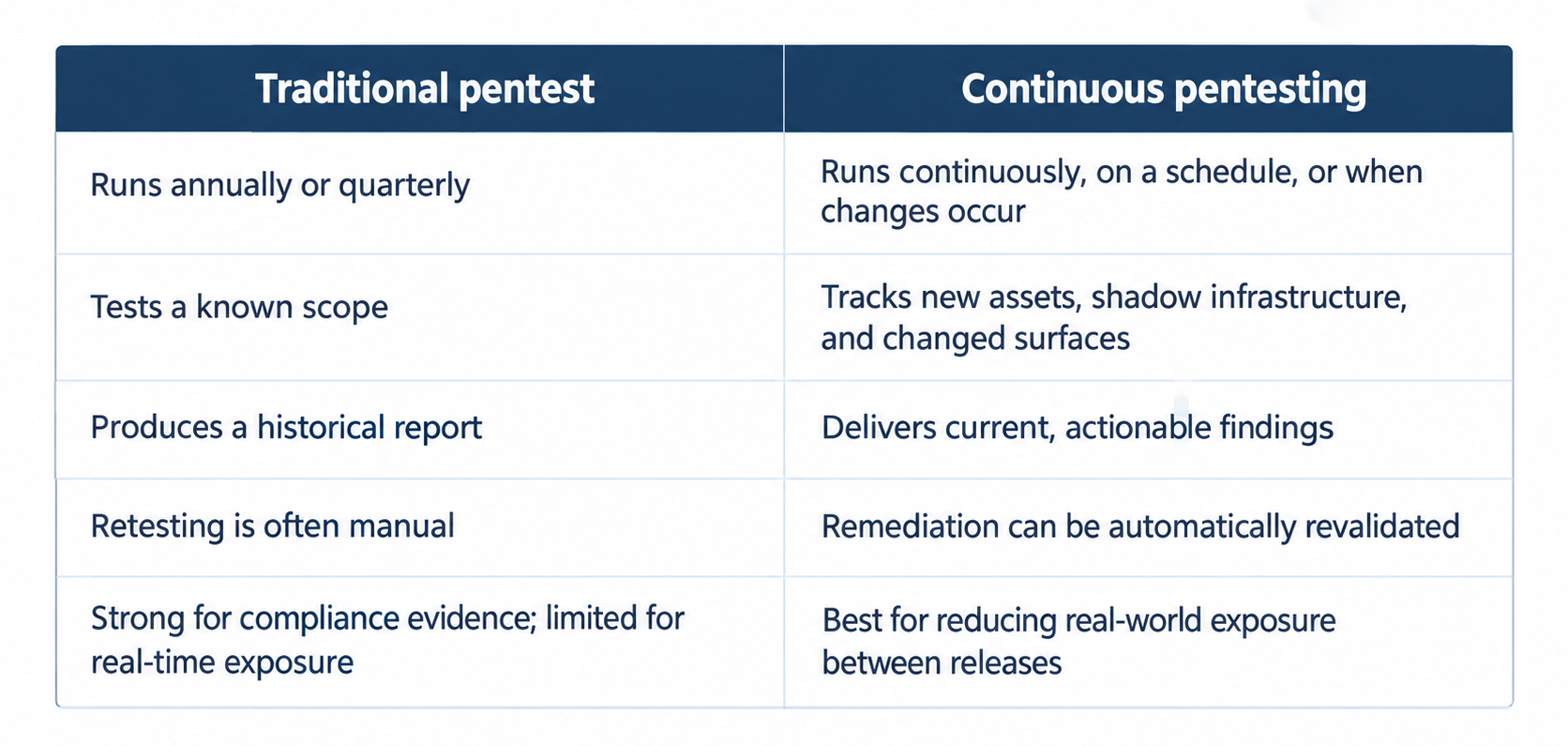
The Problem With “Annual Security”
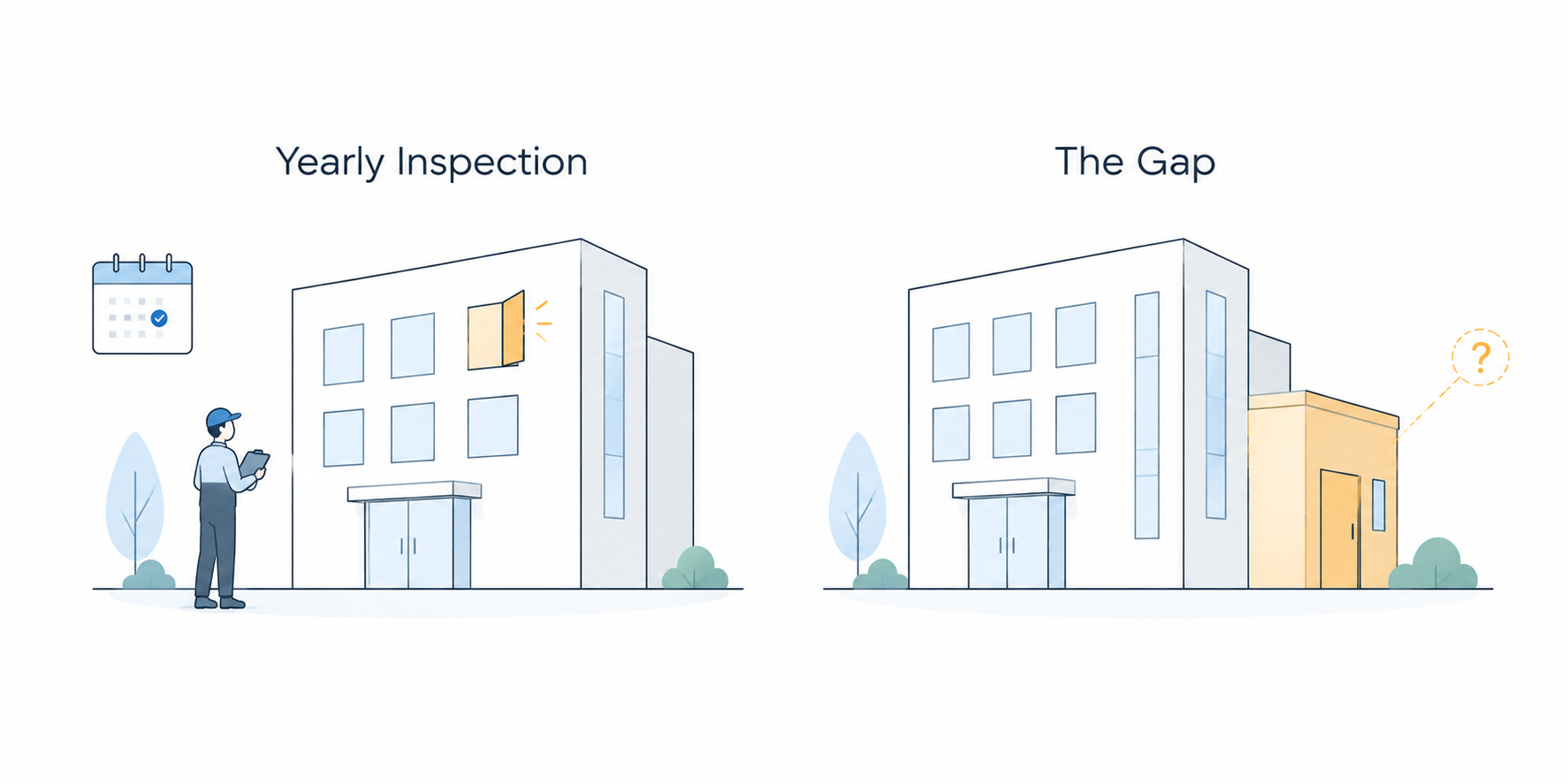
A typical penetration test is similar to employing a locksmith to carry out a once-a-year inspection of your building. They could come across an unlocked window, a poorly secured lock, and a side door that no one uses. That's good news, but three weeks later your team carry out renovations to the building, install a new entrance, and give a contractor temporary access.
The new entrance will not be rechecked until next year. The fundamental drawback of periodic testing is that it only records risk at a single point in time, since modern cloud-native environments can alter between testing periods. The precise rate at which these changes occur differs from one organization to another and therefore teams should base their assessment on their own deployment, cloud-inventory, and API-change data in order to find out how fast their exposure is changing. NIST's guidance on continuous monitoring advocates for maintaining a continuous awareness of assets, vulnerabilities, and the effectiveness of security controls rather than depending entirely on periodic snapshots [2].
What “Continuous” Really Means
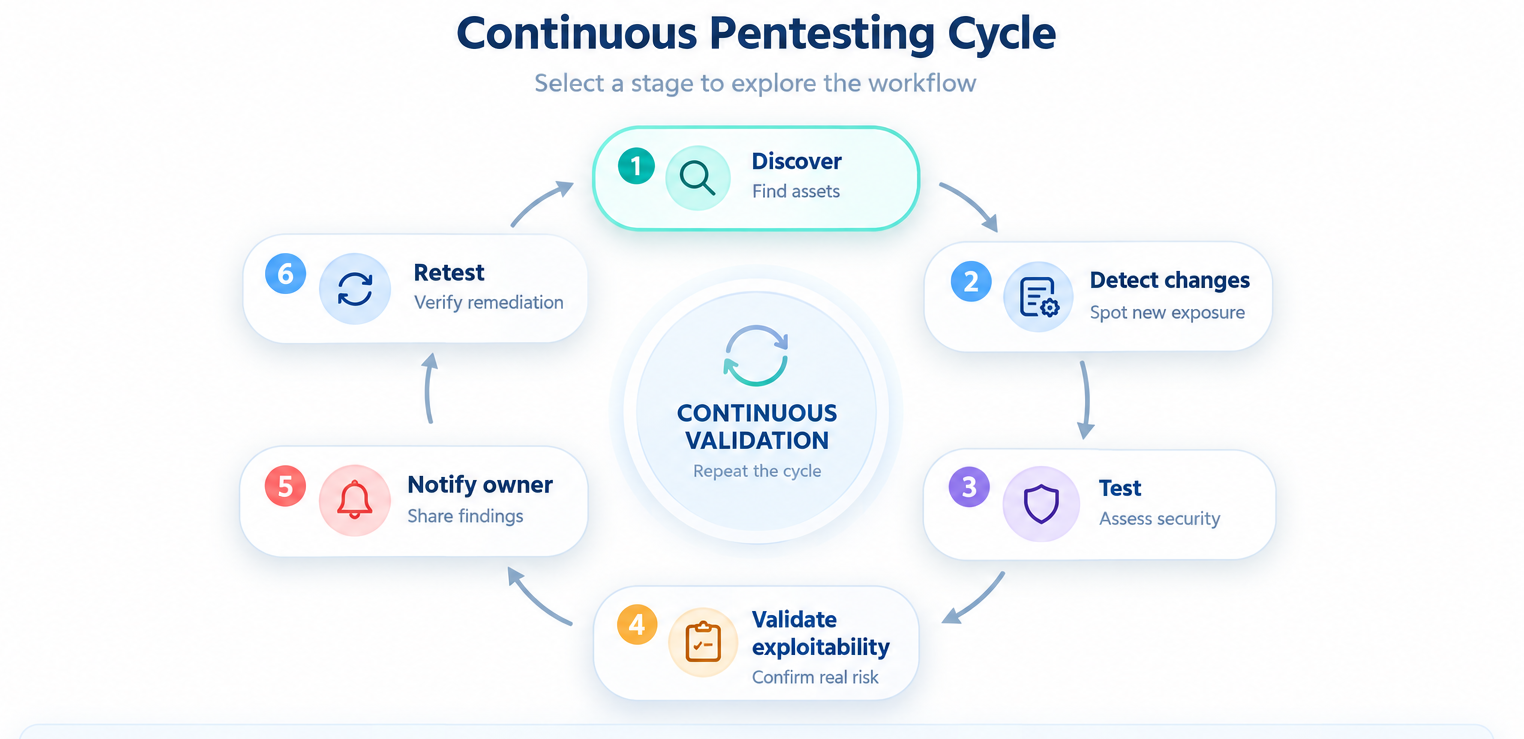
Just because something is continuous doesn't mean that the scanner will fire nonstop at each and every asset until your infrastructure is left with no choice but to ask for mercy. It means security testing becomes a persistent loop:
Discover the attack surface.
Check for any changes in the code, in the cloud, in the APIs, and in the infrastructure.
Test the new and altered assets.
Check if the findings are truly exploitable.
Notify the right owner of the risk.
The retest following the fix is carried out.
The cycle continues without having to wait until the following annual engagement.
It's better to think of it not as an annual audit but as a security operations team continuously asking itself: "What has changed, what can an attacker now access, and can we prove it?"
How It Works Under the Hood
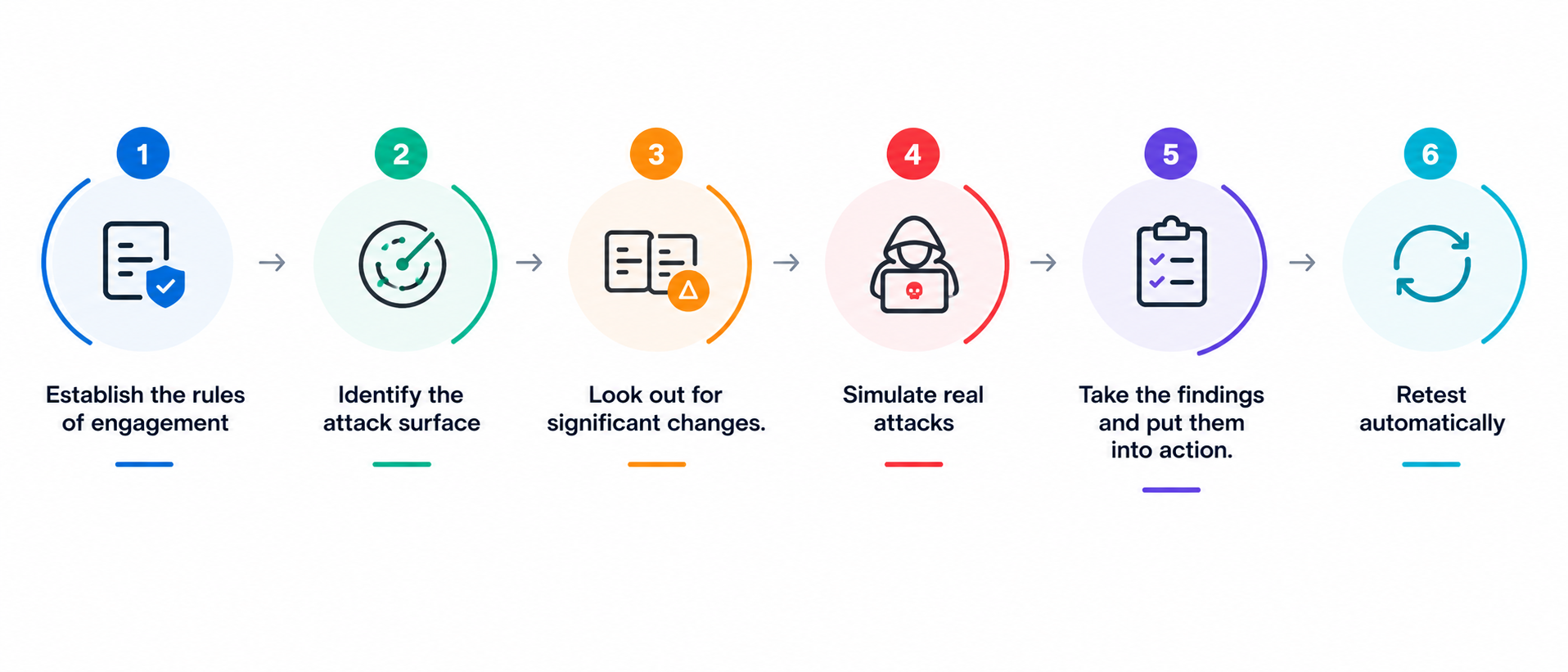
1. Establish the rules of engagement
Before any testing takes place, the program must have explicit authorization and a defined scope—specifying which domains, applications, cloud accounts, APIs, networks, and test environments are included.
It stops accidental disruption and means that the testing team will be aware of the boundaries. Setting the scope and obtaining authorization are the basic steps in a continuous testing program. NIST SP 800-115 also stresses the importance of planning assessments, carrying out tests, analysing the findings, and drawing up mitigation strategies [1].
2. Identify the attack surface
The platform includes external-facing assets such as domains, subdomains, exposed services, cloud resources, APIs, certificates, and forgotten environments. The extent of the inventory depends on the data sources, the permissions, the discovery methods, and the environments that are within the scope; it should not be assumed that any platform will automatically identify every asset.
What is important is that attackers don't mind if an asset is "official"; all they care about is whether it is reachable.
The system enables this discovery to be applied in large and constantly changing environments and assists in identifying shadow assets that show up outside the scheduled test periods.
3. Look out for significant changes.
Instead of blindly repeating identical scans, mature continuous testing focuses on deltas:
A new API endpoint is being made available.
The cloud bucket is made public.
A firewall rule changes.
A new subdomain appears.
A dependency gets a serious CVE.
The authentication flow is redesigned.
What we want to do is to examine the changes rather than just increase the frequency of scanning.
4. Simulate real attacks
Automated testing is useful for detecting common problems such as misconfigurations, exposed services, outdated software, and known vulnerabilities. However, the results still require context since the presence of a weakness does not mean that an attacker can exploit it or that it poses a material business risk.
Human penetration testers are able to look into complex problems—such as flawed access control, pathways for privilege escalation, abuse of business logic, and chained vulnerabilities—these kinds of issues often requiring judgment that is specific to the application. The OWASP Web Security Testing Guide offers a structured approach for assessing the security of web applications and for evaluating the impact of the weaknesses that are identified [3].
The most powerful model uses automation to ensure consistent coverage together with human judgment for dealing with context and carrying out validation.
5. Take the findings and put them into action.
A finding being good doesn't mean merely that "a critical CVE has been discovered."
It answers:
What asset is affected?
Who owns it?
Can an attacker really take advantage of it?
What are the effects on business?
Exactly what fix is needed?
Has the fix worked?
Findings are sent to the asset owners through the use of continuous platforms and these platforms provide dashboards which can be used for prioritization and to track remediation.
6. Retest automatically
When a fix has been deployed, the system then revalidates it.
The situation is now complete. A vulnerability is not regarded as "resolved" just because a ticket has been marked as complete; it is only considered resolved when the attack path ceases to function.
A Practical Example
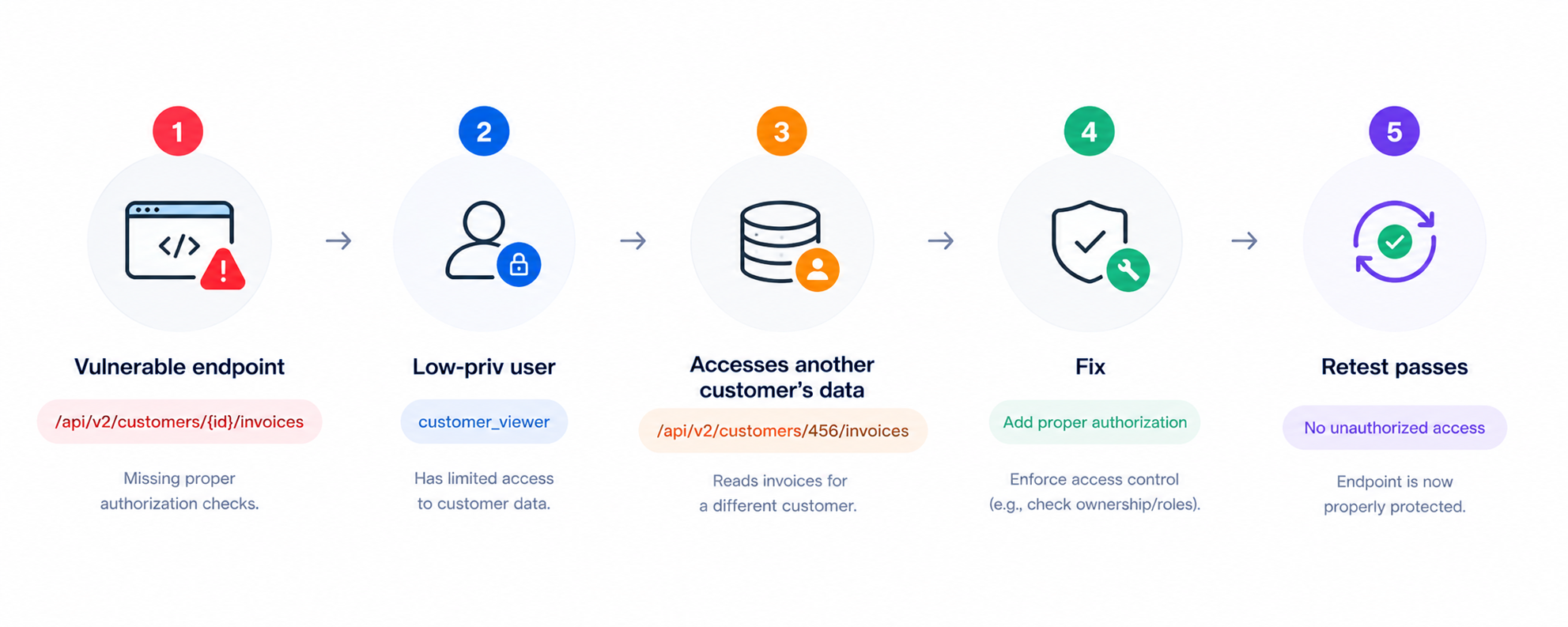
Suppose that your team launches a new customer-dashboard feature. In the case of traditional models, the feature could have to wait for as long as several months until the next penetration test. With the deployment, testing is carried out on the new endpoints, the authentication behaviour, the API permissions, and the cloud resources.
Imagining that the new feature reveals an internal API parameter—for instance,
code/api/v2/customers/{id}/invoicesenables a user with low privileges to request data belonging to another customer. The automated tests identify the endpoint and a human tester then verifies that the problem can be chained to result in the exposure of account data.
The security team is given a validated finding together with the steps to reproduce it, information about the impact, and a suggestion for remediation. When the developer has fixed the issue, the platform retests and confirms that the problem is no longer present.
That is what the always-on security system is for. It identifies risks while they are still fresh, not once they have turned into incidents.
A Hypothetical Example: Measuring the Impact
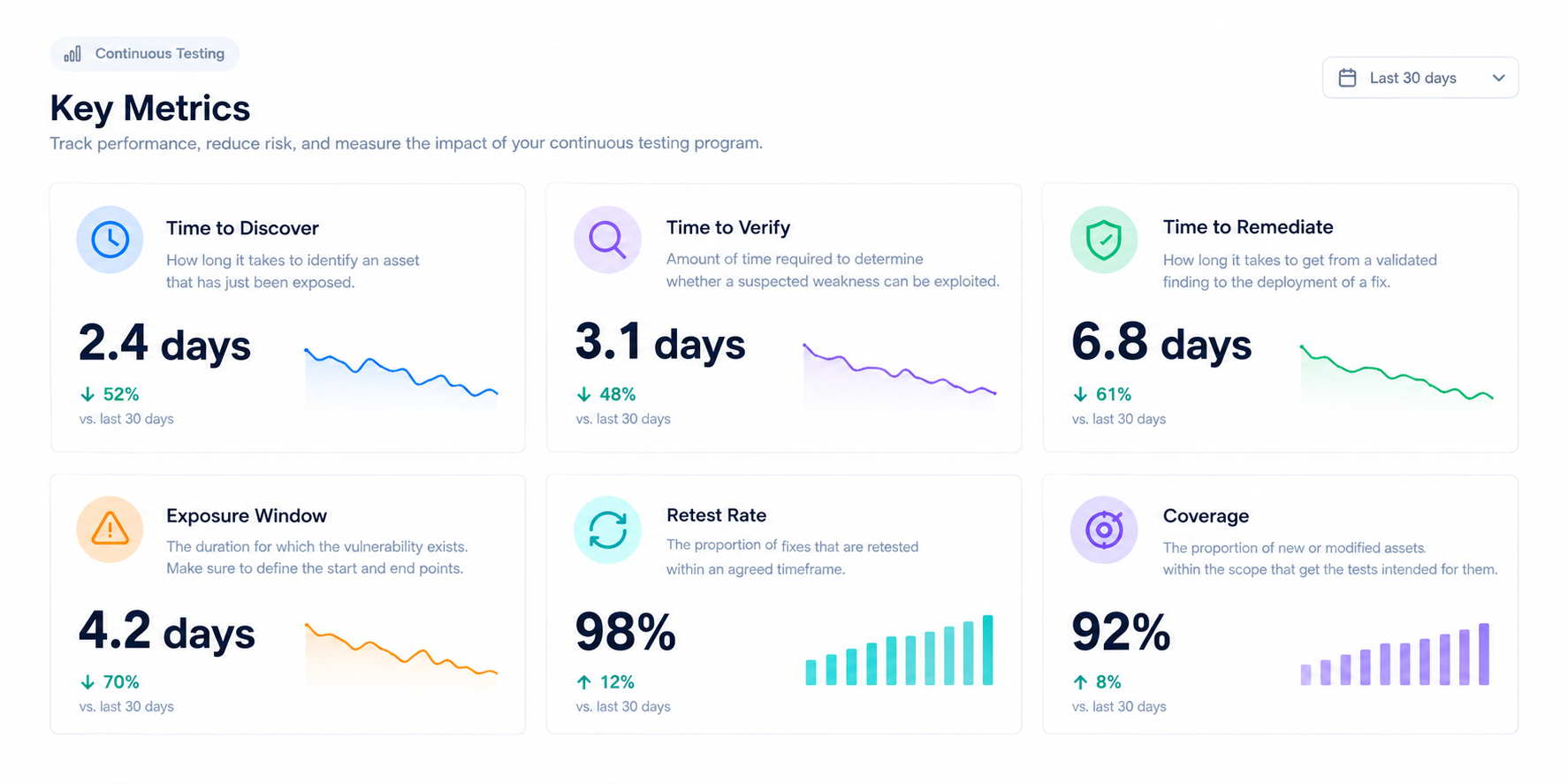
Imagine a fintech company which frequently deploys its software and has customer-facing APIs that are exposed. It depends on having a penetration test carried out once a year and also undergoes periodic vulnerability scans. When a new version is released, it includes a flaw with regard to authorization on an invoice endpoint, as a result of which a user is able to request another customer's data.
In the continuous testing model, when an deployment takes place the system checks the modified endpoint and its access controls. The tester then verifies the finding, records the possible impact, and passes it on to the team that is in charge of the API. Once a fix has been deployed the endpoint is retested to make sure that the unauthorized access route has been closed.
This example is purely hypothetical and does not refer to an actual customer engagement or claim of having achieved results. If you want to assess a genuine program, set up a baseline and monitor metrics such as:
The time it takes to identify an asset that has just been exposed is the time between the moment it is exposed and when it is discovered.
It's now time to verify a finding: the amount of time required to determine whether a suspected weakness can be exploited.
The time needed to carry out remediation: how long does it take to get from a validated finding to the deployment of a fix?
The exposure window refers to the duration for which the vulnerability exists. Make sure to consistently define the starting and ending points.
The rate at which repairs are retested: the proportion of fixes that are retested within an agreed timeframe.
The proportion of new or modified assets within the scope that get the tests intended for them.
Compare the various measures over time and record the scope, the definitions of severity, and the method of measurement. Results will differ depending on the environment, the extent of testing, the staffing level, and the remediation workflow; do not present illustrative targets as guaranteed results.
What It Is Not
It’s not just vulnerability scanning, pentesting is testing whether vulnerabilities are exploitable and what attack paths exist.
It is not a replacement for secure development but works alongside secure coding, code review, threat modeling and DevSecOps.
This is not a free-for-all for reckless attacks against production; safe testing requires guard rails, controlled environments and careful handling of destructive actions.
It’s not fully autonomous. Automation adds speed and scale, but human expertise is still required for high-value findings.
These approaches overlap and vendors use the terms differently. Don’t focus on the product name, focus on real capabilities, scope, human validation, safety controls and retesting.
Why Security Teams Adopt It
Carrying out continuous penetration testing reduces the dangerous gap between the situation of being secure during the audit and being secure at this moment.
It helps teams:
Catch the vulnerabilities caused by the frequent releases.
Quickly identify new and shadow assets.
Focus on risks that matter to the business and can be exploited. Ignore useless scanner alerts.
Demonstrate the effectiveness of remediation by carrying out further testing.
Provide leadership with a up-to-date view of security risk rather than a outdated annual summary.
The Bottom Line
Continuous penetration testing is effective since it views security in the same way as software—namely, as something that has versions, can be observed, is tested whenever there's a change, and is continually improved.
Your attackers don't follow an annual schedule, neither should your defences.
The future of offensive security won't be to "test harder once a year". It will be to test intelligently, continuously, and in all the places where your attack surface goes next.
References
Souppaya, M., & Scarfone, K. (2008). Technical Guide to Information Security Testing and Assessment (NIST SP 800-115). National Institute of Standards and Technology. https://csrc.nist.gov/pubs/sp/800/115/final
Dempsey, K., Chawla, N., Johnson, L., Johnston, R., Jones, A., Orebaugh, A., Scholl, M., & Stine, K. (2011). Information Security Continuous Monitoring (ISCM) for Federal Information Systems and Organizations (NIST SP 800-137). National Institute of Standards and Technology. https://csrc.nist.gov/pubs/sp/800/137/final
OWASP Foundation. (2026). OWASP Web Security Testing Guide (WSTG).
https://owasp.org/www-project-web-security-testing-guide/