

Bangladesh's rush into digital services hasn't slowed down, and neither have the people trying to exploit it. The 2016 Bangladesh Bank heist is still the case everyone points to, but it's really the years since — wave after wave of citizen data leaks — that show the pattern clearly: this is a country with a lot of value moving online and not nearly enough defense to match it. By 2026, nobody is losing sleep over garden-variety viruses anymore. The real threats are targeted, patient, and built to work on software bugs and human trust in equal measure.
Here's a rundown of the threats businesses and institutions in Bangladesh need to be watching this year:
1. Targeting of Mobile Financial Services (MFS)
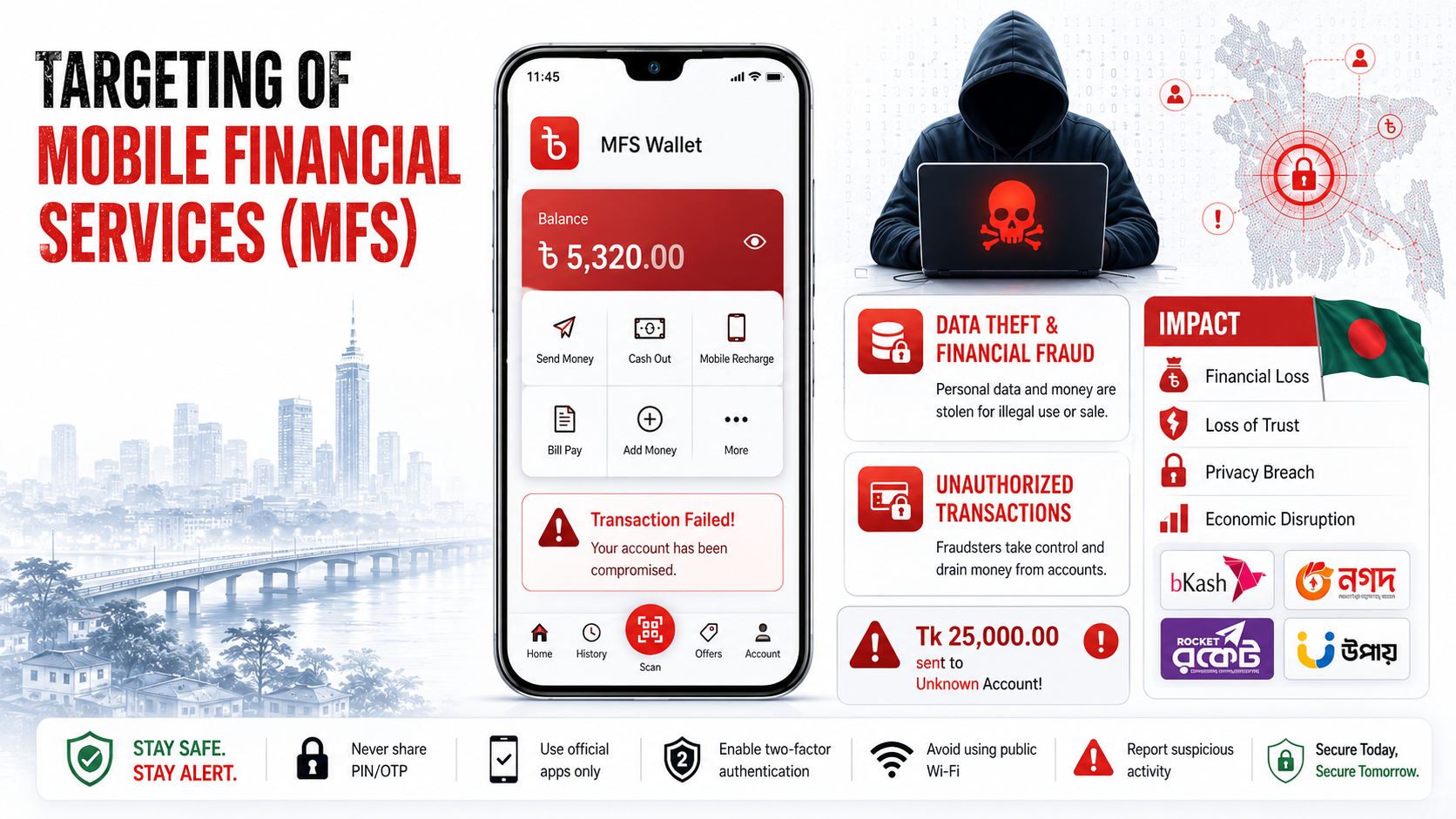
BKash, Nagad, Rocket — these apps move so much money in Bangladesh that they've basically become a magnet for trouble. Hackers aren't relying on brute force alone; they're mixing technical exploits with old-fashioned manipulation to empty people's wallets. The classic move is still a phone call: someone claiming to be "customer support" who talks you into reading off your OTP or PIN. That trick isn't going away in 2026 — if anything, it's getting scarier, with AI-generated voices and deepfakes convincing enough to sound like your bank manager or even your own brother on the phone.
2. Sophisticated Phishing and Social Engineering
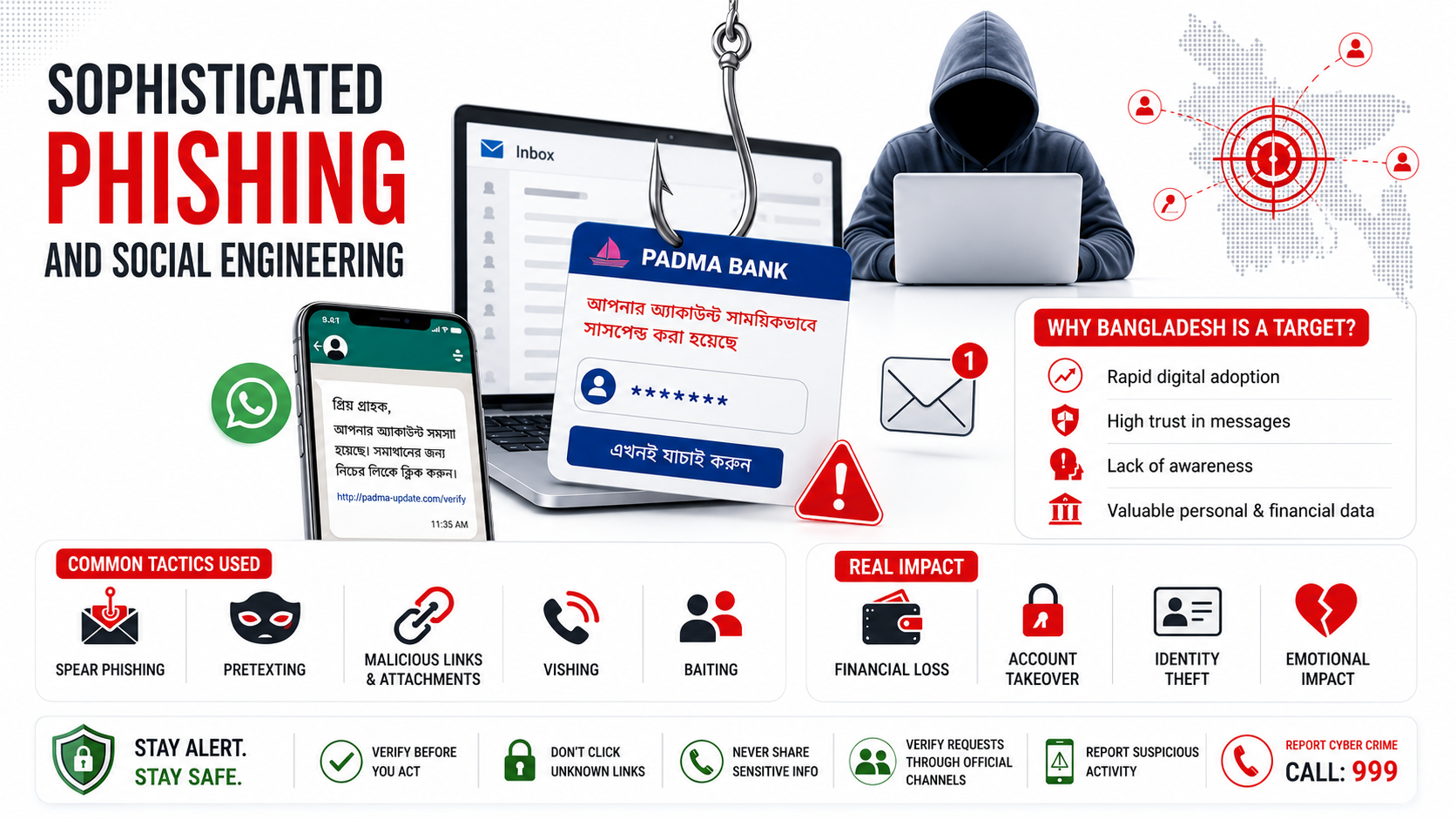
Forget the obvious spam email full of typos — that's not what phishing looks like anymore. Attackers now build messages around real local news, cultural moments, even internal company gossip, all to get someone to hand over a password or click something they shouldn't. A lot of this starts on social media: fake LinkedIn and Facebook profiles pretending to be recruiters or company leaders, built convincingly enough to fool people who know better. There's also a quieter trap going around — modded, unofficial versions of popular delivery and shopping apps that look completely normal but are actually loaded with spyware, quietly grabbing SMS codes and slipping past two-factor authentication.
3. Ransomware Attacks on SMEs and Local Businesses
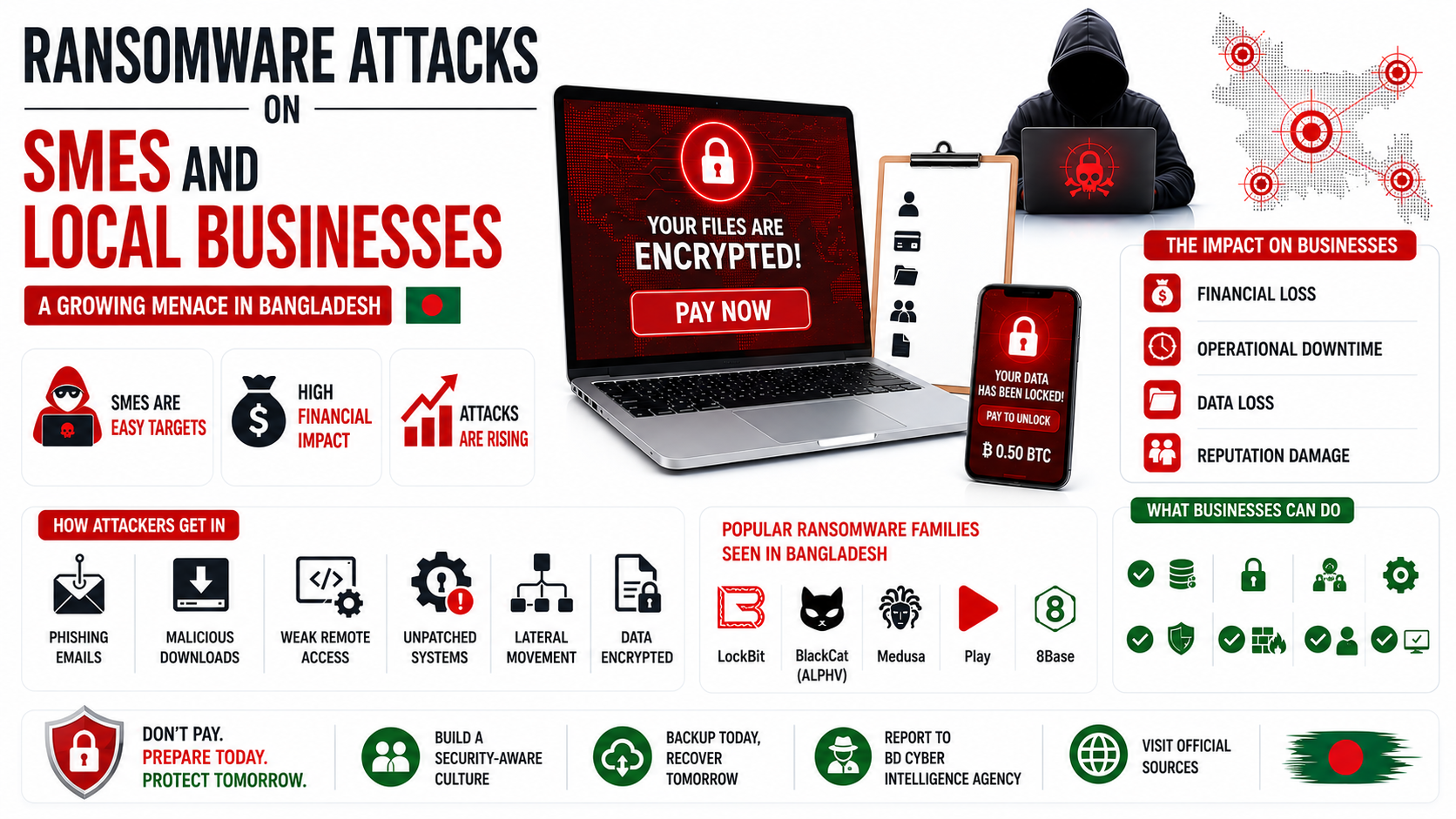
Big corporations have security teams and budgets to match. Smaller businesses don't — and that's exactly why ransomware gangs have started looking past the giants and toward local businesses, particularly in the Ready-Made Garments sector. Without dedicated IT security, these companies are sitting ducks. Attackers also know the RMG industry runs on tight shipping deadlines, so they lean on that urgency to squeeze out a fast payment. And it's rarely just about locking your files anymore — double extortion means they steal your data first, then threaten to dump it publicly if you don't pay.
4. Risks to Fintech and Digital Banking
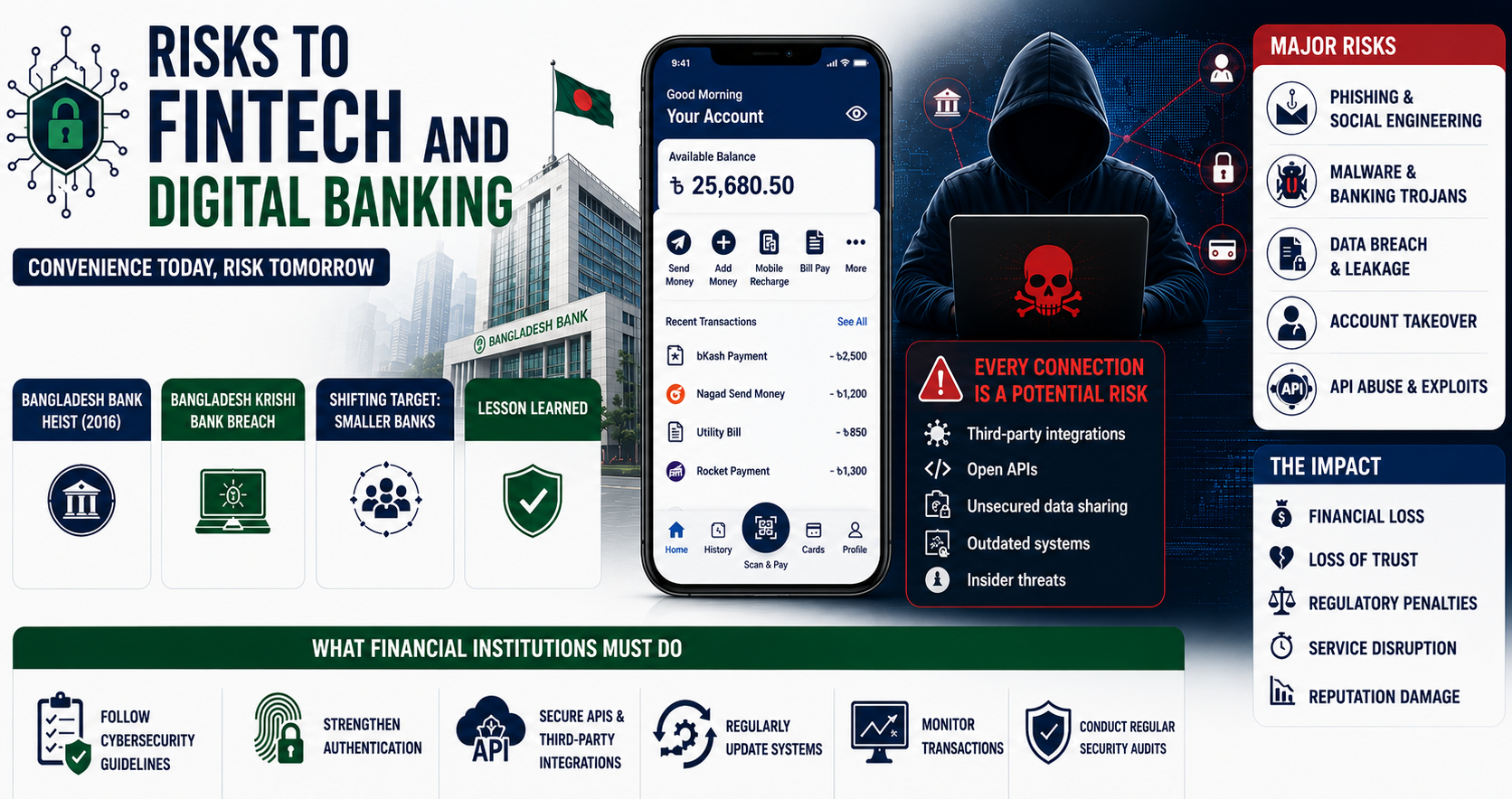
Digital banking never really gets a break. Every new connection to a third-party app or global network is another possible way in for attackers, and the list of entry points just keeps growing. We've already seen what that looks like in practice — the 2016 Bangladesh Bank heist, the 170GB data breach at Bangladesh Krishi Bank. Lately, the focus has been shifting toward smaller, community-based banks that don't have the same security muscle as the bigger institutions. That's exactly why financial organizations can't treat Bangladesh Bank's cybersecurity guidelines as a checkbox — following them closely has become non-negotiable.
5. Evolving South Asian Threat Landscape
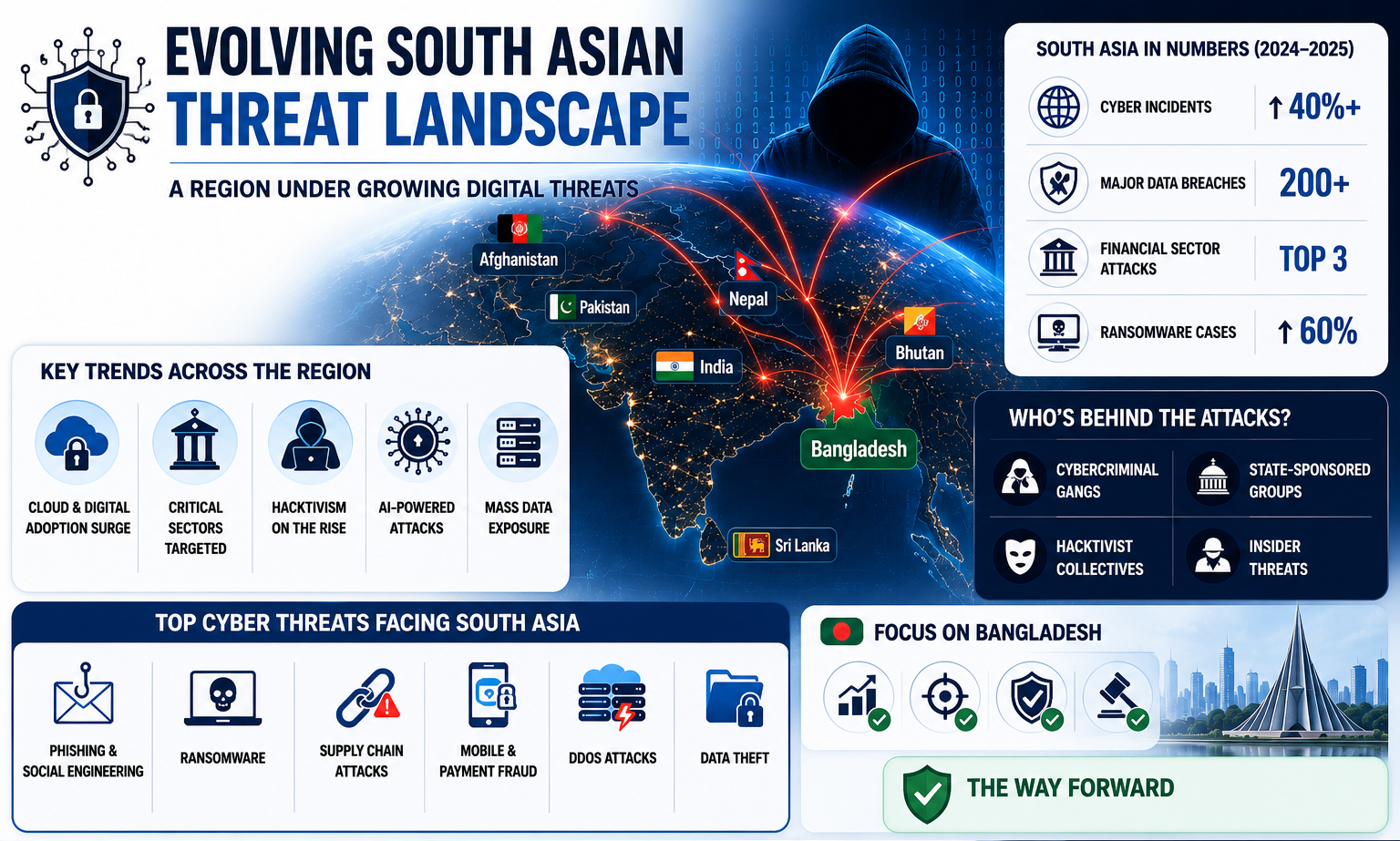
Bangladesh's location puts it right in the middle of a much bigger regional problem. State-sponsored hacking and cross-border espionage happening elsewhere in South Asia don't stay contained — they spill into local networks too, which means staying alert can't just be a local concern anymore. Political tension, whether it's homegrown or regional, tends to set off hacktivist attacks that flood government and media sites until they buckle. And going forward, expect more of the same automation: bots constantly scanning for weak servers, and AI being used to churn out fake news that spreads before anyone can catch it.
Strategic Resilience: The Path Forward
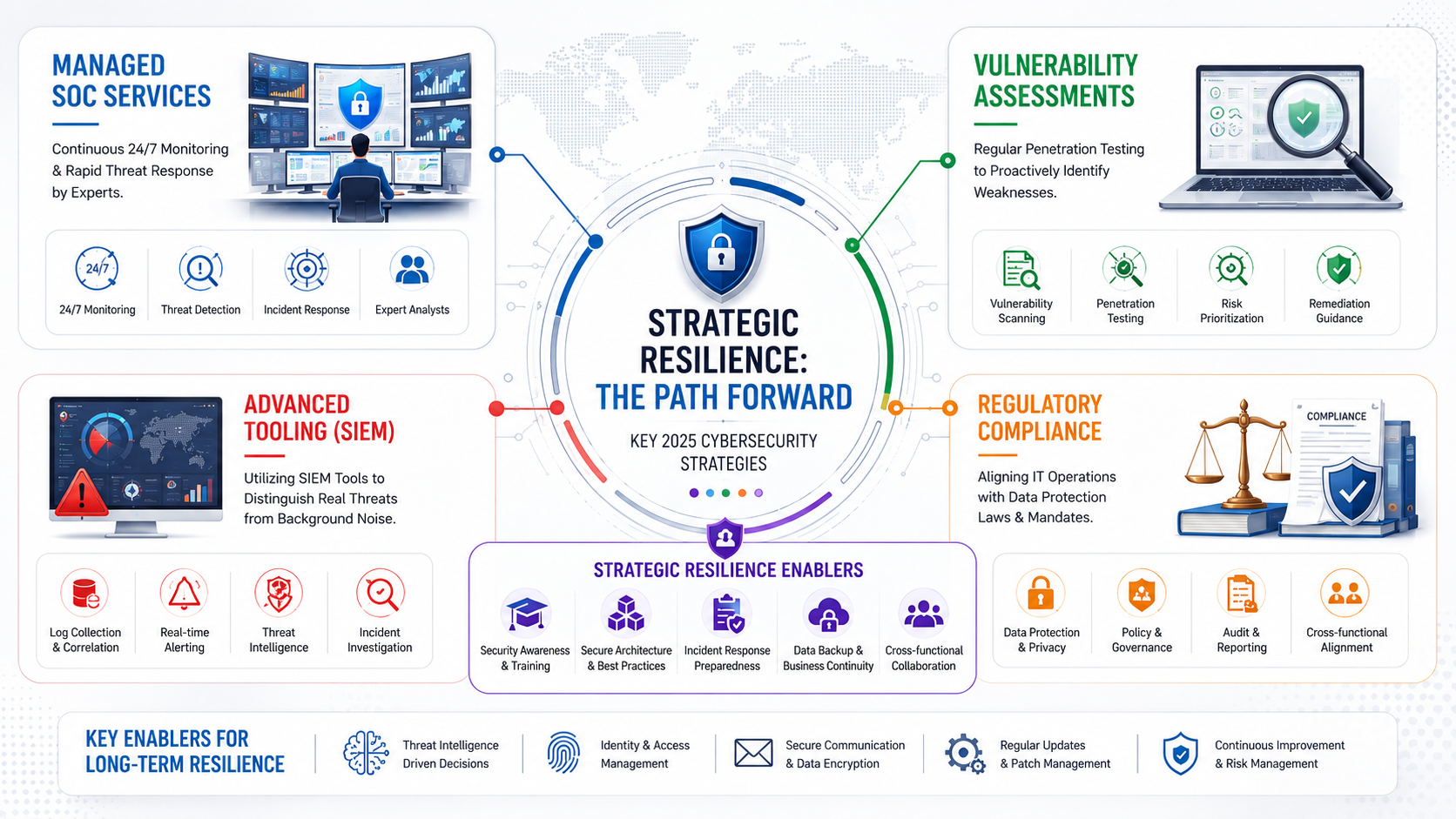
None of this is unsolvable, but it does mean shifting from reacting to incidents toward actually getting ahead of them. A few things stand out for 2026:
Managed SOC Services: standing up a Security Operations Center that watches the network around the clock and can respond fast when something looks wrong.
Vulnerability Assessments: regular penetration testing to find the cracks before someone else does.
Regulatory Compliance: keeping IT practices aligned with data protection laws and central bank mandates.
Advanced Tooling: SIEM systems that help separate a genuine threat from background noise.
Bangladesh's 2026 threat landscape really comes down to a story about speed — the country is digitizing faster than it's securing itself. Good software helps, but it's not the whole answer. What's needed is a culture that takes security seriously and actually understands what's coming after it. The threats keep getting smarter, backed by AI and organized crime, but the fundamentals haven't changed: patch your systems, use MFA, back up your data, and train your people. The real question for 2026 is whether institutions close these gaps before the next major incident forces the issue.