


Searching for "how to start in cybersecurity" will bring up thousands of articles, tutorials, roadmaps, and opinions.
But which advice should you actually follow?
To find out, we spoke with someone who has experienced the journey firsthand.
Khan Janny, Chief Information Security Officer (CISO) at Penough Limited, Advisor at CTF Community Bangladesh, active bug bounty hunter, and cybersecurity product builder, shared his experiences and answered eight questions that many beginners have.
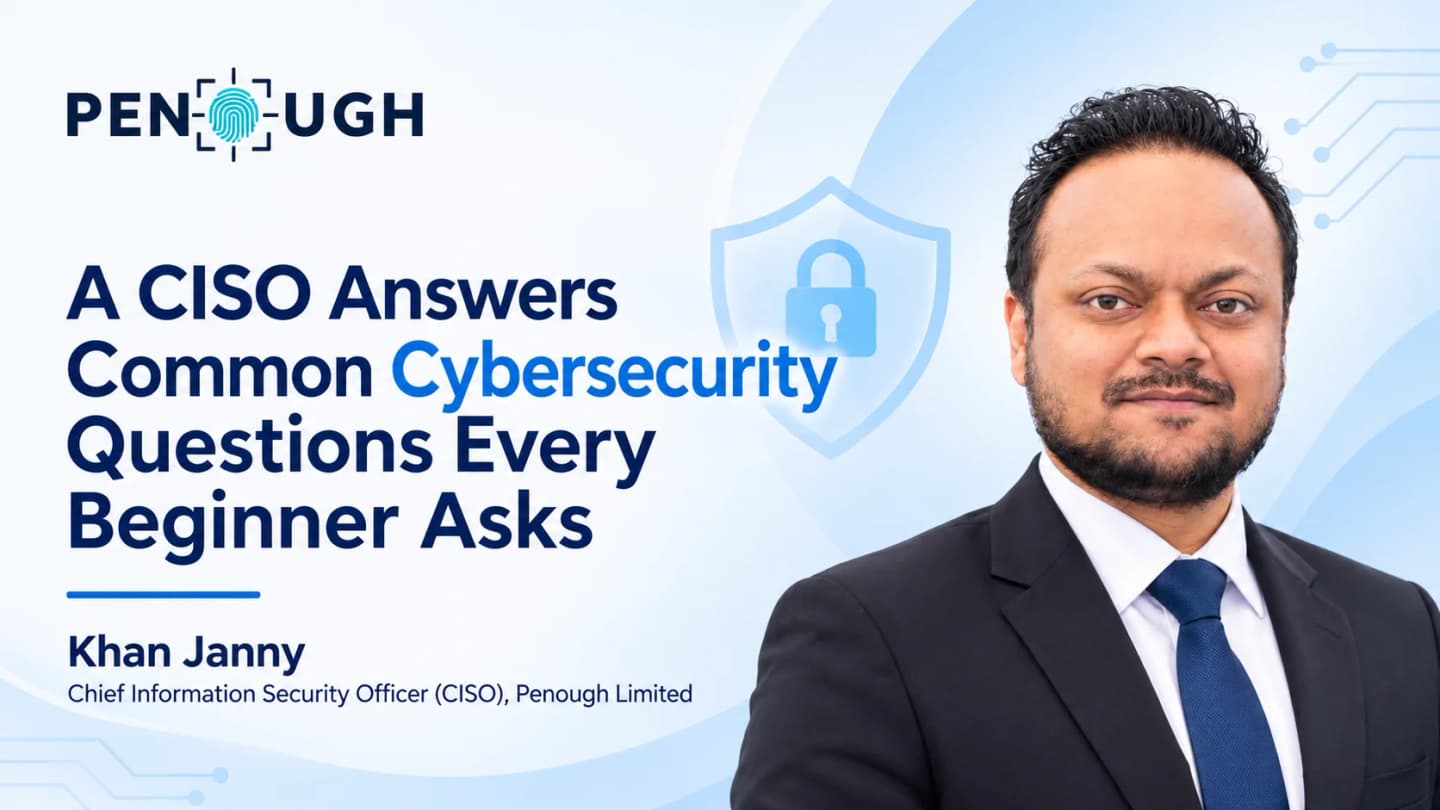
From learning the basics to using AI in security research, his answers offer practical advice for anyone interested in building a career in cybersecurity.
Let's explore what he had to say.
8 Cybersecurity Questions Every Beginner Asks
1. Does CTF Actually Help in Real Security Work?
Yes, but only if you focus on learning, not just winning competitions.
CTF (Capture The Flag) competitions are a great way to develop practical cybersecurity skills. They give you different security challenges and allow you to solve them in a controlled environment.
However, simply completing challenges isn't enough. You need to understand how and why each solution works.
For example, imagine you're solving a web security challenge and discover a possible SQL injection vulnerability.
You have found a weakness, but your learning shouldn't stop there.
Ask yourself:
Why is this part of the application vulnerable?
What information could an attacker access?
What happens if you try different inputs?
Could this weakness lead to other security problems?
How could a developer fix it?
These questions help you understand how vulnerabilities work and how they can be prevented.
This knowledge becomes useful when performing real-world penetration testing.
In an actual security assessment, nobody tells you where a vulnerability exists. You have to explore the application, test different possibilities, and identify weaknesses yourself.
Of course, real security work is not exactly like solving CTF challenges. Real applications are often more complicated, and problems don't always have clear solutions.
But CTF competitions help you develop the problem-solving skills needed to face those situations.
CTF teaches you how to approach a problem. Real learning begins when you understand the problem beyond capturing the flag.
If you only focus on your competition score, you'll collect points. But if you take the time to understand each challenge, you'll develop skills that can help you in actual security work.
2. How Do I Start in Cybersecurity?
Start with the basics. Before learning how to find vulnerabilities, understand how technology works.
Khan Janny explains that you cannot properly identify weaknesses in a system if you don't understand how that system operates.
Before jumping into advanced security tools, bug bounty platforms, or hacking techniques, learn how modern applications and computer systems work.
For example, start by understanding these questions:
How does a website work?
Where are websites hosted?
What does a load balancer do?
What is a Web Application Firewall (WAF)?
How does a browser communicate with a website?
How do APIs send and receive information?
How do different parts of an application communicate with each other?
You don't need to become an expert in everything immediately.
However, you should understand the basic technologies behind the applications and systems you want to investigate.
Why does this matter?
Imagine you're using a security tool and it reports something unusual.
If you understand how the application works, you can investigate the result and figure out whether it is a real problem.
But without that knowledge, you may simply depend on tools and follow instructions without understanding what you're doing.
Khan Janny also highlights the importance of regular practice.
You don't have to know everything before getting started. Someone may know more than you today, but consistent learning and practice can help you improve over time.
Start with the fundamentals, experiment with what you learn, and keep practicing.
Progress comes from consistency, not shortcuts.
3. Do I Need Programming to Become a Cybersecurity Professional?
Yes. Programming can make you much more productive in cybersecurity.
You can find vulnerabilities through manual testing, but programming allows you to automate repetitive tasks, process large amounts of information, and investigate potential problems more efficiently.
The real advantage isn't just knowing how to write code. It's knowing how to build tools that make your security work easier.
Khan Janny shared that he uses Burp Suite and has developed around 10–12 custom extensions to support his personal workflow.
These extensions help him:
Automatically examine HTTP requests and responses.
Find places where tested inputs appear in application responses.
Detect unusual changes in responses.
Highlight suspicious patterns.
Perform initial checks for possible vulnerabilities.
Instead of manually checking every request, these extensions handle many repetitive tasks.
This gives him more time to focus on understanding the application and investigating potential security problems.
For example, he can spend more time:
Exploring how an application works.
Understanding how its API endpoints communicate.
Identifying how different features depend on each other.
Testing how the application behaves with unexpected inputs.
Programming also gives security researchers the freedom to build their own tools.
If an existing tool doesn't support a particular task, you can write a script or develop an extension to solve that problem.
Programming doesn't replace cybersecurity knowledge. It helps you use that knowledge more effectively and complete tasks faster.
4. Should I Automate First or Learn Manual Testing First?
Understand the process first. Automate it afterward.
Khan Janny believes beginners should understand a security technique before trying to automate it.
Many beginners see experienced researchers running automated scripts and try to copy the same approach.
codeThey download a script, run a command, and expect to find vulnerabilities.But there's a problem: they may not understand what the script is actually doing.
If the application changes or the script encounters an unfamiliar situation, they may not know how to fix it.
Khan Janny recommends following these steps:
Step 1: Understand the Vulnerability
Learn what the vulnerability is, why it happens, and how it affects an application.
Step 2: Understand the Tools
Explore the tools that security researchers use. Try to understand their features, testing methods, and how they work.
Step 3: Try Building Your Own Solution
Write a simple script or tool that performs the same task. This helps you check whether you actually understand the process.
Step 4: Automate Repetitive Work
Once you understand the technique, use automation to complete repetitive tasks faster and handle larger workloads.
However, not everything needs to be done manually.
For example, content discovery and subdomain enumeration are tasks that can be automated from the beginning.
Even then, you should understand what your tools are doing.
Ask yourself:
Why am I using this wordlist?
What information am I trying to discover?
Does the size of the wordlist affect the results?
Are the results useful for my investigation?
The important thing is to understand the purpose behind each automated task.
Automation makes your existing skills more powerful. But if you don't understand the process, you're simply running commands without knowing what they do.
5. Do Cybersecurity Certifications Matter?
Yes, but their importance depends on your experience and career goals.
Some people believe certifications are essential for a cybersecurity career. Others believe practical skills matter more.
Khan Janny explains that both have value, but their importance can change depending on the situation.
When Are Certifications Useful?
1. When You Have Little Practical Experience
Imagine you're applying for your first cybersecurity job.
You don't have professional experience, a public research portfolio, or many examples of your work.
In this situation, certifications can help demonstrate that you have studied particular cybersecurity topics and completed a structured assessment.
They can give employers an initial idea of your knowledge.
2. When an Employer Requires Specific Certifications
Some international organizations and larger companies have specific hiring requirements.
If a job requires a particular certification, having that qualification may be necessary to apply or move forward in the recruitment process.
When Do Practical Skills Matter More?
1. When You Can Demonstrate Your Abilities
If you regularly participate in security research, solve CTF challenges, contribute to security projects, or have experience working with organizations, your practical work becomes important evidence of your abilities.
2. When Pursuing Bug Bounty Hunting or Freelancing
In bug bounty hunting and freelance security work, your ability to identify vulnerabilities, investigate applications, and explain your findings is particularly important.
As Khan Janny explained, certifications are not always necessary if you can demonstrate that you have the skills to perform the work.
The difference is simple:
A certification shows that you have completed a learning or assessment process.
Practical experience shows how you apply what you've learned.
Both can be useful.
Certifications can help you get opportunities, but practical skills help you demonstrate what you can actually do.
6. Should I Focus on Tools or Understanding the Application?
Focus on understanding the application first.
According to Khan Janny, a security researcher needs to understand how an application works before trying to find weaknesses in it.
Whether you're investigating a website, web application, or mobile application, start by exploring its features and behavior.
Ask yourself:
What does this application do?
Where does its data come from?
Where does the data go?
How do different parts of the application communicate?
What happens when the application receives unexpected input?
How does it protect sensitive information?
Two important areas to consider are data protection and data security.
Once you understand how an application works, it becomes easier to identify where security problems might exist.
For example, you can start recognizing:
Which parts of the application need closer attention.
Which inputs should be tested.
How different inputs affect application behavior.
What a normal request and response should look like.
Which unexpected behaviors might indicate a security problem.
This understanding also makes security tools more useful.
Instead of running a scanner and blindly trusting its results, you can investigate whether its findings make sense.
You can understand why a particular issue was reported and whether it represents a genuine security risk.
The goal is to understand the system well enough to know what you're looking for.
7. Will AI Replace Bug Bounty Hunters?
AI will change how security researchers work, but it doesn't remove the need for human knowledge.
Khan Janny believes AI can significantly improve the productivity of bug bounty hunters and security researchers.
A human researcher has limited working hours. An AI-powered system can help perform repetitive analysis, monitor information, and work on multiple tasks.
However, real-world applications are complicated.
Most AI-powered security tools are designed to handle common situations. Their performance can change depending on how an application is built and how its different components work.
Sometimes, researchers need to adjust these tools to make them useful for a particular application.
Khan Janny shared an interesting approach he developed using AI and HTTP request analysis.
The process involves:
Capturing an application's original HTTP request.
Creating a modified version of that request.
Comparing the responses from both requests.
Providing the information to an AI system along with relevant security knowledge.
Checking whether the results indicate a genuine vulnerability.
He developed a custom extension to support this process.
According to Khan Janny, the system was able to identify the issues he was looking for while also highlighting other potential security problems that he hadn't specifically planned to investigate.
This demonstrates how AI can support security research.
It can help researchers examine information, recognize patterns, and discover possibilities they might otherwise overlook.
However, there is an important limitation.
AI can produce incorrect results. It may identify something as a vulnerability even when it isn't a real security issue.
Researchers still need to understand the findings, verify the results, and determine the actual impact.
Khan Janny expressed this concern clearly:
AI gave me a lot of information. If I don't even understand what this thing actually is, that thing will be very harmful.
His message is important for beginners.
AI can make a knowledgeable researcher more productive. But if you don't understand cybersecurity fundamentals, you may struggle to identify incorrect information or make decisions based on misleading results.
The future isn't about AI replacing every security researcher. It's about researchers learning how to use AI effectively while maintaining their own technical knowledge.
8. What's the One Thing Every Cybersecurity Beginner Should Know?
Understand how things work, and keep practicing until you improve.
This is the central message behind Khan Janny's advice.
During the interview, he reflected on his own journey.
When he started as a student in 2015, he could solve only 2 out of 20 CTF challenges.
Today, he works as a CISO, builds cybersecurity products, and continues to participate in security research and bug bounty hunting.
His experience offers an important lesson.
You don't need to know everything before starting a cybersecurity journey.
You need to build a foundation, understand what you don't know, and keep working to improve.
Don't chase every new security tool.
Don't depend entirely on automated scripts.
Don't assume that certifications alone will make you a cybersecurity professional.
Instead:
Understand how technology works.
Learn programming and other technical fundamentals.
Practice identifying security weaknesses.
Explore how applications behave.
Learn from your mistakes.
Keep improving your skills.
A strong cybersecurity foundation isn't built by collecting tools. It's built by understanding the systems those tools are designed to protect or test.
Beyond Bug Hunting: Building Surveiller
Finding vulnerabilities is only one part of security research.
Before researchers can investigate an organization's systems, they first need to understand what assets the organization has exposed to the internet.
For example:
What domains belong to an organization?
Are there any additional subdomains?
What technologies are its websites using?
Are any services publicly accessible?
Is sensitive information accidentally exposed?
Finding answers to these questions is part of asset discovery and external reconnaissance.
To support this type of work, Khan Janny and his team at Penough developed Surveiller, a threat intelligence and asset discovery platform.
It is designed to help security researchers, bug bounty hunters, and organizations discover and investigate internet-facing assets.
Instead of using several separate sources for different types of information, researchers can explore multiple capabilities through one platform.
What Can You Do with Surveiller?
1. General Search
Search the platform's available database using domain names and other search parameters.
2. Domain Intelligence
Explore subdomains, related domains, SSL certificates, and information about the technologies used by websites.
3. Body Content Search
Search the actual content of webpages to find specific words, information, or patterns.
4. Technology Intelligence
Discover technologies used by websites, including information about their technology stacks and available versions.
5. IP Intelligence
Investigate IP addresses and explore related infrastructure information, including assets that may not be visible through Cloudflare or similar proxy services.
6. ASN Intelligence
Explore Autonomous System Numbers (ASNs) and investigate related network information.
7. Subdomain Enumeration
Discover subdomains and explore available information about an organization's internet-facing assets. Researchers can also request specific data when additional coverage is needed.
8. Port Scanning
Explore available port scanning information. Additional data and capabilities are also available through premium access.
9. Data Export
Export available information for offline analysis and further investigation.
These features help researchers collect and understand information about an organization's external assets.
For security professionals, knowing what is exposed to the internet is an important first step toward identifying potential security risks.
Explore Surveiller: Penough Surveiller
Khan Janny's Advice to Organizations
Khan Janny's experience isn't limited to individual security research.
As a CISO and cybersecurity professional, he has also observed security challenges from the organizational side.
According to him, many organizations still struggle with basic cybersecurity practices.
During the interview, he highlighted four areas that organizations should pay attention to.
1. Take the Basics Seriously
Some organizations take cybersecurity very seriously. However, many still struggle to turn security awareness into actual practice.
Khan Janny observed that banks and international organizations operating in Bangladesh generally show greater cybersecurity awareness than many other organizations.
The Bangladesh Bank cyber heist was an important event that changed how financial institutions viewed cybersecurity.
But being aware of security risks isn't enough.
Organizations also need to:
Apply proper security settings.
Regularly review their systems.
Protect sensitive information.
Update applications and infrastructure.
Maintain basic security controls.
Even when a system has default security protections enabled, additional configuration may be necessary.
The problem isn't always the absence of advanced security technology.
Sometimes, organizations simply fail to follow basic security practices consistently.
2. Learn to Explain What You Actually Need
One problem Khan Janny frequently encounters is the communication gap between organizations and cybersecurity professionals.
An organization might say:
"We need security."
But what does that actually mean?
Several important questions remain unanswered:
Which systems need protection?
What security risks are you concerned about?
Why do you need a particular security service?
What should the security assessment cover?
What results do you expect?
These questions are important because cybersecurity services are designed to solve different problems.
For example, an organization that wants to monitor suspicious activities may need a different solution from one that wants to identify vulnerabilities in its website.
Without clearly explaining the requirements, choosing the right security solution becomes difficult.
The same problem can exist inside organizations. Even HR departments may understand that cybersecurity is important without knowing how to arrange or maintain the necessary security measures.
Cybersecurity isn't only a technical responsibility. Organizations also need to understand their risks and communicate their requirements clearly.
3. Close the Knowledge and Skills Gap
Cybersecurity awareness in Bangladesh has improved over the years.
More developers understand basic security concepts, and more professionals are moving into cybersecurity-related positions.
However, Khan Janny believes that having a cybersecurity-related job title doesn't necessarily mean someone has the technical knowledge needed to perform the work.
The skills gap remains a significant challenge.
He has also seen organizations with highly capable security teams, including financial institutions with strong internal expertise.
At the same time, other organizations still struggle to understand their actual security requirements.
For example, an organization may need:
A Security Operations Center (SOC): To monitor and respond to security threats.
Vulnerability Assessment and Penetration Testing (VAPT): To identify weaknesses in its systems.
Defensive security capabilities: To protect its infrastructure.
Incident response support: To investigate security incidents.
Choosing the right solution requires an understanding of the organization's systems and security risks.
Organizations need professionals who can identify problems, understand the technology involved, and recommend suitable solutions.
Improving cybersecurity capabilities requires more than introducing new job titles.
It requires continuous learning, technical knowledge, and practical experience.
4. Fix Misconfigurations Before They Become Security Incidents
One of the most interesting examples Khan Janny shared came from a research project he conducted around 2020.
The project involved continuously checking websites and generating daily reports to identify possible information exposures.
According to his findings, the system identified around 20–50 websites per day that appeared to expose potentially sensitive information.
Some websites were built using frameworks such as Laravel, but their configurations or other sensitive information were publicly accessible.
Examples included:
SMTP credentials.
Database credentials.
API keys.
Sensitive application configuration files.
He highlighted several common exposure problems.
GET Parameter Exposure
Sometimes, sensitive information is included directly in website URLs.
For example, information added after a question mark in a URL is called a query parameter.
If sensitive data is placed there, it may be exposed through browser history, server logs, analytics systems, or other sources.
Environment File Exposure
Developers often use .env files to store application settings and sensitive information.
These files may contain database passwords, API keys, and other credentials.
If a .env file is publicly accessible through a website, attackers may be able to access information that should remain private.
Backup File Exposure
Organizations sometimes keep backup files on their web servers.
These files may contain application source code, configuration details, or other sensitive information.
If they are publicly accessible, they can expose information that attackers could misuse.
Leftover Backup Files
Developers may create temporary backups while updating or maintaining a website.
The problem occurs when these files are forgotten and left on the public server.
Over time, they can become an unnecessary security risk.
These examples show that organizations don't always need to face sophisticated attacks to experience security problems.
Simple mistakes, such as exposed configuration files, weak access controls, and poorly managed credentials, can create serious risks.
Regular security assessments and continuous monitoring can help organizations identify these problems before attackers discover them.
For organizations in Bangladesh, improving cybersecurity starts with getting the fundamentals right.
For security researchers, however, there is another important responsibility: always respect legal boundaries and obtain proper authorization before testing systems or collecting information.
How Penough Helps Organizations Strengthen Cybersecurity
Understanding security risks is the first step. Organizations also need the right tools, services, and expertise to address those risks.
Penough Limited develops cybersecurity products and provides specialized security services to help organizations identify vulnerabilities, monitor threats, and improve their security.
Penough Cybersecurity Products
Penough offers cybersecurity products designed to address different security challenges.
1. PhishTop – Phishing Simulation and Security Awareness
Phishing is one of the common ways attackers try to trick employees into sharing sensitive information or clicking malicious links.
PhishTop helps organizations understand how employees respond to phishing attempts through realistic simulations.
Its features include:
Phishing campaign management.
Customizable phishing templates.
Employee risk assessment.
Campaign performance reports.
This helps organizations identify employees who may need additional training and improve their overall security awareness.
2. BugValluk – Continuous Penetration Testing
Finding a vulnerability is only the beginning. Organizations also need to track security issues and make sure they are properly fixed.
BugValluk supports continuous security testing by helping organizations:
Identify application vulnerabilities.
Work with security testers.
Track reported issues.
Monitor remediation progress.
Retest vulnerabilities after fixes.
This helps organizations maintain better visibility into their security testing activities.
3. Surveiller – Threat Intelligence and Attack Surface Monitoring
Organizations often have websites, servers, subdomains, and other internet-facing assets that need to be monitored.
Surveiller helps organizations discover these assets and investigate potential external security risks.
Its capabilities include:
External asset discovery.
Subdomain enumeration.
Technology identification.
Potential credential leak discovery.
Brand impersonation monitoring.
External threat investigation.
Penough Cybersecurity Services
Alongside its products, Penough provides specialized cybersecurity services to help organizations identify, investigate, and respond to security threats.
Service | What It Does |
|---|---|
Monitors systems, detects suspicious activities, and supports threat response. | |
Investigates security incidents, preserves digital evidence, and supports recovery. | |
Searches for hidden threats and analyzes malicious software. | |
Identifies and tests security weaknesses in applications, networks, and infrastructure. | |
Tests an organization's security defenses through controlled attack simulations. | |
Reviews network settings and identifies possible security weaknesses. |
These services support organizations at different stages of their cybersecurity journey, from finding vulnerabilities to investigating and responding to security incidents.
Explore Penough's Cybersecurity Services and Products.
Penough Academy: Making Cybersecurity Education More Accessible
Learning cybersecurity requires more than watching tutorials or reading about security concepts. It takes practical experience, proper guidance, and the opportunity to work with real-world scenarios.
Through Penough Academy, Penough aims to make cybersecurity education more accessible to students, beginners, IT professionals, and aspiring security researchers in Bangladesh.
The Academy currently offers courses covering both defensive and offensive security, including:
DCS101 – Defensive Cyber Security 101: An introduction to cyber defense, threat detection, digital forensics, and incident response.
DCS201 – Defensive Cyber Security 201: Advanced defensive security strategies and techniques.
CDCS – Complete Defensive Cyber Security: A comprehensive professional-level defensive security learning path.
WAS101 – Web Application Security 101: Practical foundations of web application security, vulnerability discovery, and bug bounty hunting.
Penough is also preparing more cybersecurity courses across different areas of the field. The goal is to create learning opportunities for people with different backgrounds, interests, and experience levels—from those taking their first steps into cybersecurity to individuals looking to develop more specialized technical skills.
For anyone searching for the best cyber security course in BD, choosing a program should involve more than looking at its title or certificate.
Practical learning, relevant course content, proper guidance, and opportunities to apply knowledge are equally important.
Penough Academy aims to bring these elements together through its growing range of cybersecurity training programs.
Explore the available courses at Penough Academy and stay connected for upcoming learning opportunities.
Final Thoughts: Build Your Foundation Before Chasing Tools
Every cybersecurity professional starts somewhere.
Some begin with CTF competitions. Others start by learning programming, exploring Linux, studying networking, or experimenting with web applications.
But as Khan Janny's experience shows, where you start is less important than how consistently you work to improve.
Start by understanding how technology works.
Learn how applications process information. Practice identifying security weaknesses. Build your own tools when existing solutions aren't enough.
Use automation to save time, and explore how AI can support your work without replacing your own technical judgment.
Cybersecurity will continue to change. New tools will appear, attack methods will become more advanced, and organizations will face new security challenges.
But the fundamentals will always matter.
You don't become a better security professional simply by learning more tools.
You become one by understanding how systems work, knowing how to investigate them, and continuously improving through practice.
That's the lesson Khan Janny's journey offers to every beginner: You don't need to know everything to get started. You just need to keep learning, understanding, and practicing.